
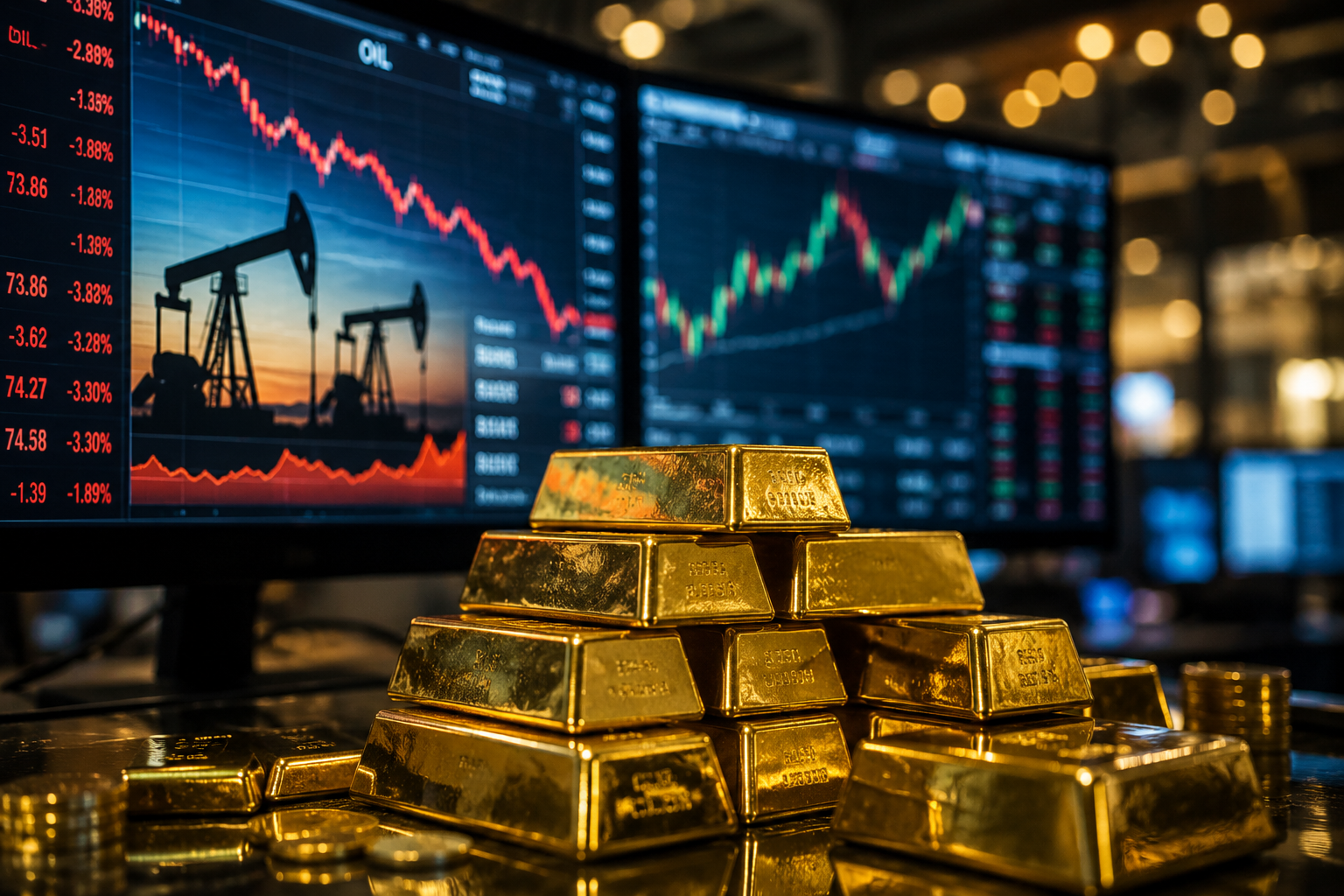
The gold price moved sharply higher after falling oil prices increased hopes that the US Federal Reserve could begin cutting interest rates sooner than expected. According to the latest market analysis from FX Empire, traders quickly returned to gold as expectations around inflation and monetary policy shifted once again.
Investors around the world are now watching the precious metal closely because gold often reacts strongly to interest rate expectations, inflation trends, and global uncertainty. This latest rally shows how quickly market sentiment can change when economic signals point toward easier financial conditions.
The renewed momentum in gold also reflects growing confidence that inflation pressure may continue cooling if energy prices remain lower.
Gold Prices Jump as Oil Prices Fall: gold price
One of the biggest reasons behind the latest gold rally is the drop in oil prices.
Lower oil prices often reduce inflation pressure because energy costs affect transportation, manufacturing, and consumer spending. When inflation slows, central banks may feel less pressure to keep interest rates high.
That is exactly what traders are focusing on right now.
As oil prices weakened, investors started increasing expectations that the Federal Reserve may cut rates sooner than previously expected. This immediately helped lift gold prices.
Why Gold Reacts to Oil Prices
Gold and oil may seem unrelated at first, but they are closely connected through inflation expectations.
When oil prices rise sharply:
- Inflation often increases
- Central banks may keep rates high
- Bond yields can rise
- Gold may face pressure
However, when oil prices fall:
- Inflation concerns may ease
- Rate cut hopes grow stronger
- Bond yields may weaken
- Gold becomes more attractive
That relationship is one of the main reasons the latest oil decline supported the gold market.
Federal Reserve Rate Cut Expectations Grow: gold price
The market’s attention is now focused heavily on possible Federal Reserve action.
Investors believe weaker inflation trends could allow the Fed to begin reducing interest rates later this year. Even small changes in rate expectations can create large reactions in the gold market.
Gold usually performs better when interest rates fall because lower rates reduce the opportunity cost of holding non-yielding assets like gold.
In simple terms, when interest rates are high, investors often prefer bonds and savings products that generate income. But when rates begin falling, gold becomes more attractive again.
Why Traders Watch the Fed So Closely
The Federal Reserve plays a huge role in global financial markets.
Its interest rate decisions influence:
- Currency markets
- Stock markets
- Bond yields
- Commodity prices
- Investor confidence
Because of that, every new economic signal affecting Fed policy can quickly impact gold prices.
Lower Treasury Yields Supported Gold
Another important factor behind the latest rally was the movement in US Treasury yields.
Treasury yields often move opposite to gold prices. When yields fall, gold usually becomes more attractive to investors.
The recent decline in yields gave additional support to the precious metal market as traders adjusted expectations around future Fed policy.
This created stronger buying momentum for gold during the latest trading sessions.
Investors Return to Safe-Haven Assets
Gold is widely known as a safe-haven investment.
Whenever uncertainty increases in global markets, many investors move money into assets viewed as more stable. Gold has historically benefited during periods of economic uncertainty, political tension, or financial volatility.
The latest market reaction suggests many investors still see gold as an important defensive asset.
Why Safe-Haven Demand Matters
Safe-haven demand can become a powerful force in financial markets.
Investors often buy gold during periods involving:
- Economic uncertainty
- Inflation concerns
- Geopolitical tensions
- Market volatility
- Currency weakness
Even when stock markets perform well, gold can still attract attention if investors feel uncertain about future economic conditions.
The US Dollar Also Influences Gold Prices
The strength of the US dollar plays another major role in gold movements.
Gold is priced globally in US dollars. When the dollar weakens, gold often becomes cheaper for international buyers, which can increase demand.
At the same time, a stronger dollar can sometimes pressure gold prices lower.
Currency traders are therefore paying close attention to both Federal Reserve policy expectations and economic data that may influence the dollar’s direction.
Inflation Remains a Key Market Story
Although lower oil prices may help reduce inflation pressure, investors are still closely monitoring economic data.
Inflation remains one of the biggest themes affecting global markets today.
Central banks continue trying to balance several goals:
- Controlling inflation
- Supporting economic growth
- Maintaining stable employment
- Avoiding recession risks
Because of this balancing act, markets can react strongly to even small changes in inflation reports.
Why Gold Often Performs Well During Inflation Concerns
Gold has long been viewed as a hedge against inflation.
Some investors buy gold because they believe it can help protect value when the purchasing power of currencies weakens.
That is why inflation data remains one of the most important drivers of gold prices worldwide.
Technical Traders Are Watching Key Gold Levels
Market analysts are also paying attention to technical price levels.
When gold prices break through important resistance levels, traders often increase buying activity. On the other hand, failure to hold support levels can trigger selling pressure.
The recent upward movement has encouraged bullish sentiment among many short-term traders.
Technical trading strategies continue playing a major role in daily gold market movements.
Momentum Is Becoming Important
Strong upward momentum can attract even more buyers.
This happens because:
- Traders follow price trends
- Automated systems react to breakouts
- Investor confidence improves
- Market psychology strengthens
As a result, rallies can sometimes accelerate quickly once momentum builds.
Global Economic Uncertainty Still Supports Gold
Beyond oil prices and interest rates, broader economic uncertainty is still helping gold remain attractive.
Investors continue facing concerns involving:
- Slowing global growth
- Geopolitical tensions
- Central bank policy shifts
- Inflation uncertainty
- Currency market volatility
These factors continue supporting long-term interest in precious metals.
Even when markets stabilize temporarily, many investors still keep some exposure to gold for protection.
Analysts Continue Monitoring Market Sentiment
Financial analysts are now watching whether the latest rally can continue.
Much will depend on upcoming:
- Inflation reports
- Federal Reserve comments
- Employment data
- Oil price trends
- Treasury yield movements
If markets continue believing rate cuts are coming, gold could remain supported.
However, stronger economic data or rising inflation could quickly change market expectations again.
Why Gold Remains Popular Worldwide
Gold has remained valuable for centuries because it combines emotional, financial, and historical importance.
Today, gold is used by:
- Central banks
- Institutional investors
- Retail traders
- Jewelry markets
- Long-term savers
Its role as both an investment and a store of value keeps it important even during changing economic conditions.
That is one reason why every major move in the gold market receives worldwide attention.
Final Thoughts
The latest gold price rally shows how quickly financial markets react to changing economic expectations. Falling oil prices increased hopes for Federal Reserve rate cuts, helping gold attract fresh investor interest.
Lower Treasury yields, safe-haven demand, and inflation concerns also added support to the precious metal market.
While uncertainty still remains, many traders continue watching gold closely as a key signal for broader market sentiment and economic expectations.
For investors, the coming weeks could be especially important as new inflation and Federal Reserve data shape the next major move in gold prices.
Read Other Interesting news here: Shenzhou-23 Mission
