
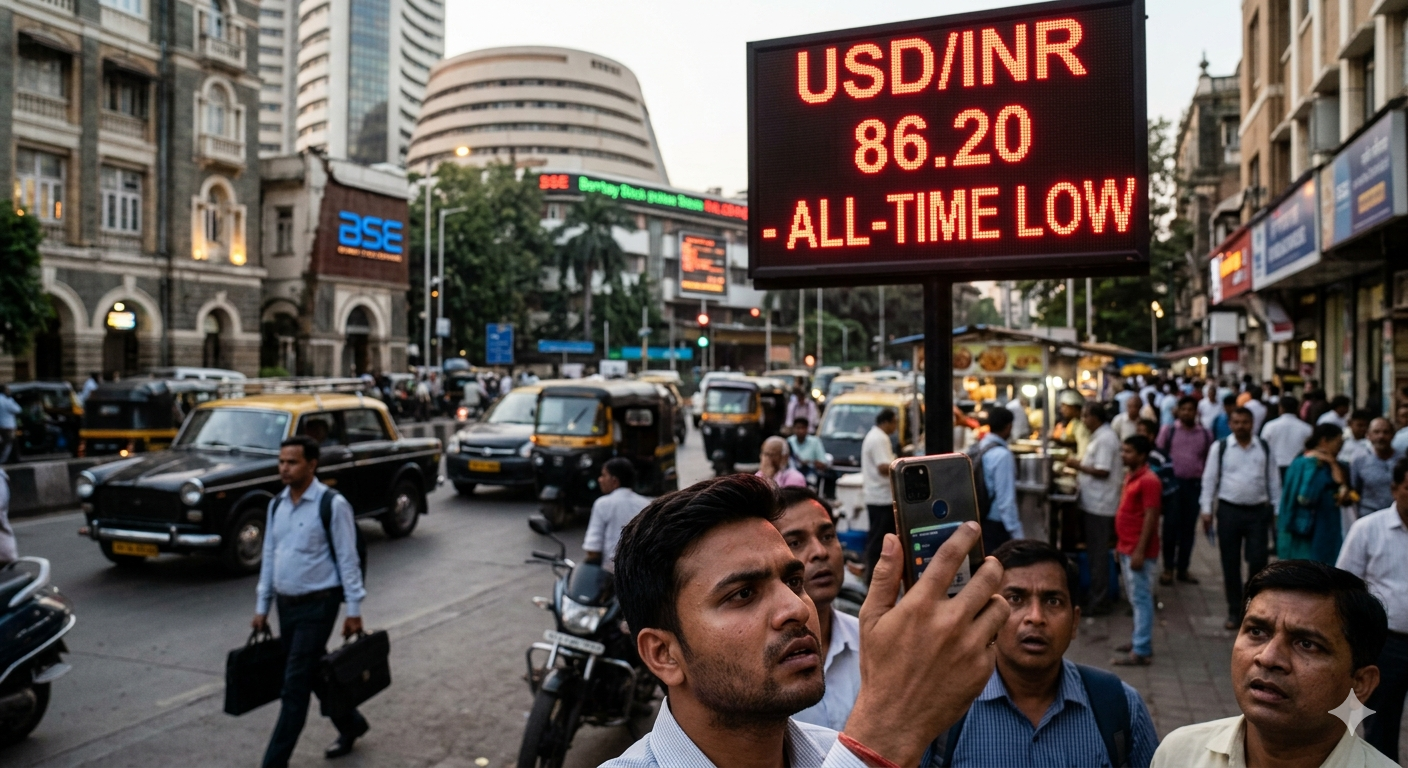
The financial markets in India faced a harsh reality this Tuesday morning. The Indian Rupee slump reached a critical breaking point, as the local currency crashed to its weakest level in history. This sudden drop didn’t happen in a vacuum; instead, it was fueled by a perfect storm of rising geopolitical heat and a surging US Dollar.
For many Indian citizens and investors, the numbers on the screen were startling. The Rupee plummeted to an all-time low of 86.20 against the greenback. This move marks a significant shift in the economic landscape, leaving many to wonder what triggered such a sharp decline. Understanding the Indian Rupee slump requires looking at both international politics and domestic trade pressures.
The Main Trigger: Tensions Between the US and Iran
The primary reason behind the Indian Rupee slump lies far beyond India’s borders. Recently, the relationship between the United States and Iran has taken a turn for the worse. The Trump administration has adopted a very firm stance, particularly concerning Iran’s nuclear program and regional influence.
This friction has sent shockwaves through the global energy market. Because India is a massive importer of energy, any trouble in the Middle East hits the local economy hard. Investors are currently fleeing “risky” currencies like the Rupee and seeking safety in the US Dollar.
The Threat of New Sanctions
Market analysts are closely watching the news for potential new sanctions. If the United States restricts Iranian oil exports further, the global supply will tighten. This fear alone is enough to drive up the cost of living and contributes to the ongoing Indian Rupee slump.
Rising Oil Prices and the Trade Deficit
Oil is the lifeblood of the Indian economy, but it is also its biggest financial burden. As Middle East tensions boil over, the price of Brent Crude oil has started to climb. When oil prices go up, India must spend more of its foreign exchange reserves to buy the same amount of fuel.
Why Oil Matters for the Rupee
Most of India’s oil is paid for in US Dollars. Therefore, when oil gets expensive, the demand for dollars inside India skyrockets. This high demand for the dollar naturally causes the Indian Rupee slump. It creates a widening trade deficit, where the value of what India imports far exceeds what it exports.
The Strength of the US Dollar
While the Rupee is struggling, the US Dollar is enjoying a period of immense strength. This is partly due to the high interest rates in the United States. When the US Federal Reserve keeps rates high, global investors move their money into American banks to get better returns.
Safe-Haven Buying
During times of war or political instability, the US Dollar acts as a “safe haven”. Investors are currently pulling money out of emerging markets like India and parking it in US assets. This mass exit of capital is a major contributor to the current Indian Rupee slump.
The Role of the Reserve Bank of India (RBI)
The Reserve Bank of India (RBI) is not sitting idly by as the currency falls. Historically, the RBI intervenes in the market to prevent the Rupee from crashing too quickly. They do this by selling US Dollars from the national reserves and buying back Rupees.
Managing Volatility
However, the RBI faces a difficult task. They cannot stop the global trend entirely; they can only slow it down. Traders believe that the central bank might have stepped in near the 86.15 level to provide some support. Without this intervention, the Indian Rupee slump could have been even more dramatic.
Impact on the Indian Consumer
A weaker Rupee isn’t just a headline for bankers; it affects every household in the country. When the currency loses value, the cost of imported goods goes up. This leads to a cycle of inflation that can hurt the average person’s pocketbook and is often the most painful result of an Indian Rupee slump.
What Will Get More Expensive?
- Electronics: Smartphones and laptops that rely on imported parts will likely see price hikes.
- Education: Students studying abroad will find their tuition fees much more expensive in Rupee terms.
- Fuel Costs: Higher oil prices eventually lead to more expensive petrol and diesel at the pump.
- Travel: International vacations will become a luxury for many as the purchasing power of the Rupee shrinks.
Foreign Portfolio Investors (FPI) Are Selling
Another reason for the Indian Rupee slump is the behavior of foreign investors. In recent weeks, Foreign Portfolio Investors (FPIs) have been selling off their holdings in the Indian stock market. When they sell these stocks, they convert their Rupees back into Dollars to take the money home.
This outflow of cash puts immense pressure on the exchange rate. As long as the geopolitical situation remains unstable, these investors might remain cautious about returning to the Indian market, prolonging the Indian Rupee slump.
What the Experts are Predicting
Looking ahead, the path for the Rupee remains uncertain. Some analysts suggest that if the US-Iran situation escalates into a direct military conflict, the Rupee could fall even further toward the 86.50 or 87.00 marks.
On the other hand, if diplomatic talks between Washington and Tehran show signs of progress, we might see a slight recovery. For now, the sentiment remains “bearish,” meaning most people expect the Indian Rupee slump to continue in the short term.
Final Thoughts
The current Indian Rupee slump to 86.20 is a reminder of how interconnected our world has become. A political decision in Washington or a military movement in the Middle East can directly impact the value of the money in an Indian citizen’s wallet. While the RBI is working hard to stabilize the situation, the global forces at play are incredibly powerful.
It is a time for investors to stay informed and for consumers to be mindful of their spending. The road ahead looks bumpy, but India’s strong foreign exchange reserves provide at least some cushion against the storm. Do you think the Indian Rupee slump will worsen by the end of the month? Share your thoughts in the comments below and subscribe for more daily economic updates!
Read Other Interesting news here: Historic Trump and Xi talks
