
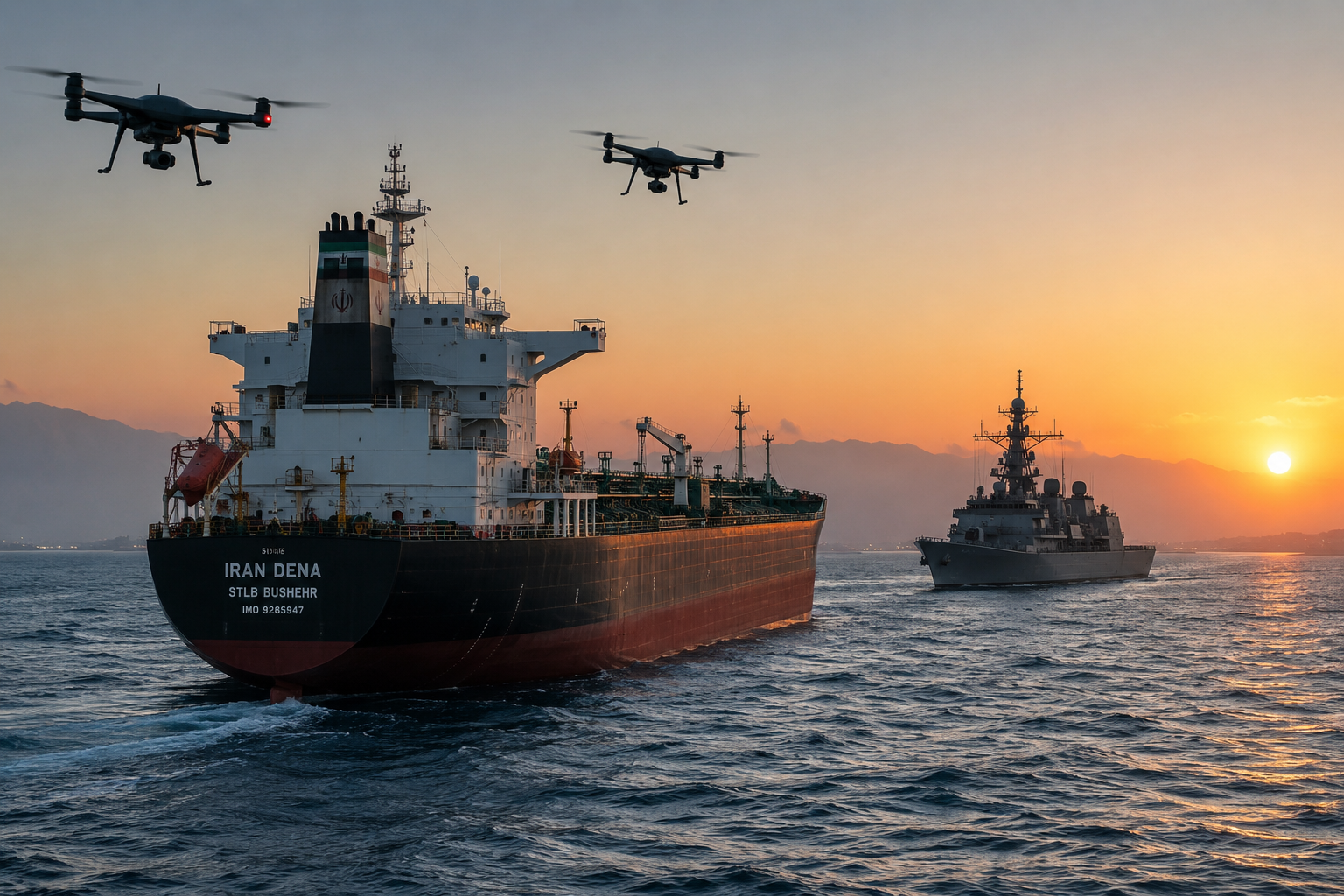
The latest IRGC warning US tensions have once again placed the Middle East at the center of global attention. Iran’s Islamic Revolutionary Guard Corps, commonly known as the IRGC, issued a strong warning after reports of attacks targeting Iranian-linked vessels near the Gulf region.
The new IRGC warning US statement came during a highly sensitive period when military activity around the Strait of Hormuz was already raising fears among international observers. With oil tankers moving through one of the world’s most important shipping routes, even a small clash can quickly affect global markets and regional stability.
Iranian military officials warned that any future attacks on Iranian commercial ships or oil tankers would face a powerful response. As a result, concerns about another dangerous confrontation between Tehran and Washington have started growing again.
Why the IRGC Warning US Matters Around the World
The latest IRGC warning US developments are not just about regional politics. The situation directly affects international trade, energy markets, and global shipping operations.
The Strait of Hormuz is one of the world’s busiest oil routes. Millions of barrels of oil pass through this narrow waterway every day. Because of this, tensions involving Iran and the United States often create immediate concern across global markets.
Many analysts believe the new IRGC warning US message was carefully designed to discourage further military action while also showing Iran’s readiness to defend its vessels in Gulf waters.
A Strategic Waterway Under Pressure
The Strait of Hormuz connects the Persian Gulf with international sea routes. Several major oil-producing countries rely on this route to export energy supplies across the world.
Whenever military tensions rise in this area, shipping companies and investors become nervous. Insurance costs for vessels can increase, while oil prices often react quickly to security fears.
Recent naval activity and military patrols have only added to the pressure already building in the Gulf.
IRGC Warning US After Reports of Vessel Attacks
Iran’s Revolutionary Guard strongly reacted to reports involving attacks on Iranian-linked ships operating near Gulf waters.
According to Iranian media reports, the IRGC Navy warned that future attacks against Iranian oil tankers or commercial vessels would trigger heavy retaliation against hostile targets and American interests in the region.
The sharp language used in the latest IRGC warning US statement immediately drew international attention. Military observers noted that the warning appeared more direct than previous comments made during earlier regional tensions.
Iranian officials also claimed that missiles and drones linked to the IRGC Aerospace Force were prepared and aimed at strategic targets connected to the United States.
Growing Concerns Over Military Escalation
The latest IRGC warning US tensions have increased fears that military misunderstandings could quickly spiral into a larger conflict.
Although no full-scale confrontation has been announced, both sides continue to accuse each other of aggressive actions near Gulf waters.
Iran maintains that attacks on its vessels violate regional stability, while American officials have repeatedly defended military operations as protective measures for their naval forces and shipping interests.
This ongoing blame game has kept tensions alive despite calls for restraint from several countries.
Cargo Ship Incident Added More Tension
Security concerns became even more serious after reports emerged about a cargo vessel being struck near Qatar.
The UK Maritime Trade Operations center stated that a ship northeast of Doha was hit by an unknown projectile. While details remain limited, the incident quickly attracted international concern because of the already fragile security environment in the region.
At nearly the same time, authorities in Kuwait reported the presence of hostile drones in their airspace. These developments fueled speculation that regional instability could spread further if tensions continue rising.
The latest IRGC warning US rhetoric gained even more attention after these incidents because they highlighted how quickly security conditions in the Gulf can change.
How the IRGC Warning US Could Affect Oil Markets
The impact of the current crisis extends far beyond politics and military operations. Energy markets are closely monitoring every new update connected to the Gulf region.
Even rumors of instability near the Strait of Hormuz can create uncertainty in oil markets because so much of the world’s crude oil supply passes through this route.
Oil Prices React Quickly to Gulf Tensions
Whenever investors hear about military risks in the Gulf, energy prices often become unstable.
Analysts say prolonged IRGC warning US tensions could place additional pressure on oil prices if shipping activity slows or security conditions worsen.
Several shipping companies are already reviewing safety measures for vessels traveling through sensitive waters near Iran and neighboring Gulf states.
Shipping Companies Remain Alert
Global shipping firms are watching the latest IRGC warning US developments very carefully.
Commercial vessels moving through the Strait of Hormuz face serious risks whenever military activity increases in the area. Some companies may decide to adjust routes or increase security procedures to avoid potential threats.
Higher insurance costs and delayed shipments are also possible if tensions continue escalating over the coming weeks.
Diplomatic Efforts Continue Behind the Scenes
Despite the harsh military language, diplomatic talks have not completely stopped.
Several countries in the region are reportedly encouraging both Tehran and Washington to avoid actions that could lead to a broader conflict.
Regional mediators understand that another major confrontation in the Gulf could damage economic stability and threaten international energy supplies.
The repeated IRGC warning US statements may be aggressive, but analysts believe diplomatic channels are still active behind closed doors.
Regional Powers Want Stability
Countries across the Middle East have strong reasons to avoid another major conflict.
Trade, tourism, investment, and energy exports all depend heavily on stability in Gulf waters. Because of this, many regional governments are urging restraint from both sides.
The international community is also closely monitoring the latest IRGC warning US developments to prevent further escalation.
Iran Appears Focused on Deterrence
Military experts believe Iran’s latest messaging is intended to send a warning rather than immediately trigger open conflict.
The IRGC has repeatedly emphasized that attacks on Iranian ships will receive a response. At the same time, Iranian officials continue highlighting their missile and drone capabilities to demonstrate military readiness.
The latest IRGC warning US narrative appears designed to discourage foreign military operations near Iranian waters while also reassuring domestic audiences about national defense capabilities.
Military Readiness Remains a Key Message
Iranian military officials openly discussed drones, missiles, and retaliatory capabilities during recent statements.
By doing so, Tehran appears determined to project strength during a period of rising regional uncertainty.
Still, analysts warn that even small incidents at sea could quickly create larger problems if communication between opposing forces breaks down.
Final Thoughts on the IRGC Warning US Crisis
The ongoing IRGC warning US tensions show how fragile security conditions remain in the Gulf region. Iran’s latest warning over attacks on its vessels has once again raised fears of military escalation near the Strait of Hormuz.
At the same time, global markets, shipping companies, and regional governments are all watching developments closely because the consequences could extend far beyond the Middle East.
While diplomatic efforts continue quietly in the background, the situation remains unpredictable. For now, the latest IRGC warning US statements serve as another reminder that stability in the Gulf remains deeply connected to global economic and political security.
Read Other Interesting news here: Oil Prices Jump
